Thursday, November 3, 2011

Blogging Matters!!! : Run, Run, Run.

Day 60.
Marathon : - A long-distance running race, strictly one of 26 miles and 385 yards (42.195 km).

This coming Sunday, i.e. Nov.6, 2011 a marathon will be held in our city of Delhi. Yes, an event known as 17th Salwan Cross Country Run is to be held this Sunday and in this event around 40,000 students are envisioned to latch on. Now, I won't be going into much details about this marathon but, this news has certainly given me something to write about the concept of marathon.

The Ancient Marathon -
--- In order to get the hang of a sport, you also need to look at its history. Marathon, which is usually run as a road race has its roots in Ancient Greece where a soldier named Pheidippides, who was a messenger from the Battle of Marathon, ran to Athens. If Greek historian Herodotus is to be believed then, the messenger ran from Athens to Sparta and back to Sparta covering a distance of 240 km or 150 mi each way.

The Modern Marathon -
--- Marathon's avatar can be located to the Modern Olympics of 1896, however the distance was fixed only after 1921. The winner of the first Olympic Marathon was a Greek water-carrier, by the name of Spyros Louis. According to the Marathon Race Directory of Marathon-world.com, more than five-hundred marathons are contested all over the world each year. Also, larger marathons can have tens of thousands of participants.

Extra Notes -
--- With the vast majority of competitors being recreational athletes, marathon forms an essential component of the sports industry. Marathon allows athletes to show their fitness. It even allows the common people to understand the importance of staying fit.

--- If I am not wrong, then most of the times the winners of these marathons are from Kenya and they have their dominance when it comes to Middle-distance and long-distance athletics. Our athletes should also train hard and try hard and surely, we can also do the same. Events like Salwan Marathon are an excellent opportunity for those 40,000 participating students and their teachers and their parents to help develop a sporting culture in the country.

Wednesday, November 2, 2011

Blogging Matters!!! : A Fit Industry - An Introduction

Day 59.
This is an unusual blog but the subject is related to this course. As the title and the image suggests, I'll be dealing in brief, with the topic of Gym Marketing and Gym Industry. But before we go a bit deeper in in gym marketing, let's try and understand the meaning of the word marketing.
--- Marketing : - The action or business of promoting and selling products or services, including market research and advertising. (Oxford Dictionary).
--- In other words, marketing is a function. It is an organizational function. It is also a set of mechanisms for creating, communicating, and distributing value to customers and for managing customer relationships in ways that benefit the organization and its stakeholders.
Now, let's grasp the meaning of the word gym. I am sure all of you are aware of what a gym is. But, let's look what the Oxford Dictionary has to say about it.
--- Gymnasium : - A place, typically a private club, providing a range of facilities designed to improve and maintain physical fitness and health.
  • According to the data provided by the Federation of Indian Chambers of Commerce and Industry (FICCI), the gym industry is worth 14,000 crore rupees.
  • Today, wellness is the daily concern with lifestyle. The earning from gym industry is burgeoning rapidly. This is because every individual wants to remain healthy, wants to be fit.
  • When we talk about marketing, customer has to be taken into consideration. Today, customer is the king, he is God and if a person wants to market his gym equipments, he cannot take him for granted.
  • Now, tourism industry is very closely related to gym industry and a couple of days back I even wrote about Sport Tourism. I'll just say that apart from tourism, health tourism is a very big business. There are a number of seven star hotels in North-East India and in Southern States like Kerala, where spa, gym and other health facilities are being doled out.
That was in brief, an introduction to gym industry. I'll be doing a few more blogs where I'll go in details about marketing strategies for gymnasiums and the management of this industry. Till then goodbye and thanks for reading.

Thought Of The Day : - ''The most beloved of people is the one who is most helpful.''

Tuesday, November 1, 2011

Blogging Matters!!! : At The End Of A Race

Day 58.
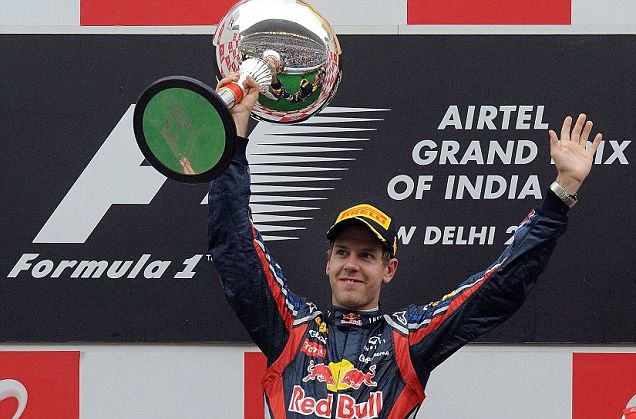
So, the F1 Indian Grand Prix's hubbub is finally over and beyond question, India has delivered quite decently. I know most of you already know what transpired after the race was over this past Sunday, but still I thought of sharing some facts about the race. Let's get things rollin' now, shall we? -
  • The race held on 30th October 2011, was the first ever Grand Prix held on Indian soil in which German driver Sebastian Vettel of Red Bull - Renault team pulled a stunning victory.
  • This win was Vettel's 11th win of the season. The world champion started at the front and hardly faced anyone daring to take him over. This was also his second Grand Prix in a row and, he also had the fastest lap of the race.
  • At position number 2 was, the British driver for McLaren and the 2009 champion, Jenson Button. The third place went to the Spaniard, Fernando Alonso, who is currently racing for Ferrari.
  • As far as the Indians are concerned, the only Indian driver, Narain Karthikeyan of Hispania Racing F1 Team finished at 17th position, while the only Indian F1 Team Sahara Force India driver Adrian Sutil finished at 9th position.
  • Other interesting facts of the 1st Indian GP were -
-- The different sizes of the F1 Indian GP Trophies were -
i) Winning Driver and Constructor : 550mm high,
ii) Second Place Driver : 450mm high,
iii) Third Place Driver : 400mm high.
-- The Indian Grand Prix had the potential to generate around $170 million in revenue and employ about 10,000 people. Also, tickets worth 1.25 crore rupees were bought in the first three hours of the sale.
-- Now, this one is a knee-slapper but true, that a dog ran into the track on the first practice session.
-- Sergio Perez had a new record for a Mexican driver collecting 14 points, the previous record was held by Hector Rebaque with 13 points in 4 years.

Those were for you, some tantalizing facts about the Indian Grand Prix. I'm sure that there are a number of other facts which I've missed out, but I expect you to write them in your comments. Till then goodbye and thanks for reading.

Monday, October 31, 2011

Blogging Matters!!! : Travelling With Sports

Day 57.
-- Sports : Any physical activity that enmeshes competition, includes organized rules and done in a specific area. Usually played for fun or people need exercise to stay fit.
-- Tourism : the commercial organization and operation of holidays and visits to places of interest. (Oxford Dictionary)
-- Sport Tourism : Pertains to travel that engrosses viewing and/or taking part in a sporting meet nesting separated from its common surroundings.

-- Today, Sport Tourism is playing the role of a catalyst in global tourism industry. As far as the global travel industry is concerned, the sector of sport tourism is advancing like a speedball (no pun intended) and equates to six hundred billion dollars, a year.
-- Tourism is a product and over the past decade sport tourism has mutated into an academic field of study. Today, sport and tourism are developed nations' most pursued leisure trip.
-- If we look back in time, then we would see that in Ancient Rome and Greece, people used to travel to distant places to participate in sporting events. So, in the modish scenario, the roots of sport tourism can be traced to the ancient practices, making the concept a better and refined version.
-- A couple of days ago, I wrote about state industry partnership and how it can improve standards of sports in India. Besides, using Sports for socio-economic development, for instance promoting intersections of sport with various industries - e.g. Tourism, can help a lot. With India's wide geographical diversities, a lot of amazing abodes are there for those who love adventure sports and the picture above is an example of such activity.
-- Today, business tours colligated with sporting activities is becoming quite trendy. Sports like Golf are a prime example of such activities. Golf tours organized at different venues, allow the players of this managerial sport, an opportunity to do business deal, which in turn has introduced the concept of corporate golf, but I digress. Yesterday, Formula 1 race was held in India and the eyes of the world were set upon us. There is little doubt in my mind that F1 race wouldn't have resulted in some bulky business deals.

That's all for today. My notion was to briefly acquaint y'all to the concept of sport tourism, but I'll be doing another blog some other time and deliberate over sport tourism in the Indian context.
Your turn Readerland, tell me what you think about tonight's work and write your own suggestions or anything and thanks for reading.

Thought Of The Day : - ''The most beloved of deeds is the one that is continuous, even if it is little.''

Sunday, October 30, 2011

Blogging Matters!!! : 'My 5ive' - Movies and Gambling

Day 56.
Erstwhile, I wrote about Sports Gambling and explained to you, the development of the Casino games and the Industry. Well, tonight's blog is about some of the finest movies made which have splendidly showcased the concept of gambling in casino games. So, rather than zeroing in on movies made on gambling in casinos, my list will try to focus on 5 movies which show how this industry was established and is run.
Let's get the list rollin' now, shall we? -

1.) Casino -

Directed by Martin Scorsese, the 1995 made movie Casino is a reflection of the best movie ever made on gambling in casinos. The movie is packed of stars like Robert De Niro and Joe Pesci and the two of them flawlessly bring their characters to fruition. The movie is about mobsters who move to Las Vegas, Nevada and their engrossment in casinos of the 1970's and 80's. The movie perfectly shows the development of casino games industry in Vegas.

2.) Ocean's Eleven -

Directed by Steven Soderbergh and made in 2001, Ocean's Eleven is the story of a gang which sets out to rob a casino. George Clooney who plays the role of Danny Ocean delivers an impeccable performance. The execution of robbery in casinos has been shot in a very suspensful manner and really makes the ripping of three casinos very entertaining. The success of this movie was followed by two sequels.

3.) Bugsy -

Made in 1991, the film Bugsy was directed by Berry Levinson and stars Warren Beatty as Bugsy Siegel. Now, this movie ain't exactly about the gambling in casinos but rather it shows how mafia people established the industry of casinos in Las Vegas in which gambling happened later on. It's a story of Bugsy's vision to establish something worthy and in doing so he doesn't care how much money he's spending. Moreover, it shows how Flamingo, a very prominent casino joint was set up.

4.) Rounders -
Rounders was made by Director John Dahl in the year 1998 and stars actors like Edward Norton and Matt Damon. This film is about the notorious terra of high-stakes poker and loan sharks in which two friends step foot, to earn cash in order to pay a huge debt. The game of poker is displayed in an exciting manner gambling scenes are really engaging and give a tutorial about the game of poker.

5.) Owning Mahowny -

Owning Mahowny is based on a real-life story about gambling addiction and was made in 2003 by Richard Kweitniowski and stars Philip Seymour Hoffman in the key role of Dan Mahowny. Mahowny, who is a bank employee is a compulsive gambler who due to his quirks, is involved in the largest fraud in the history of Canada. This movie is like a detailed description of a man's gambling groove in the industry of casino games.

Thought Of The Day : - ''The thing that weighs most heavily in the balance (of good deeds), is a good attitude.''

Friday, October 28, 2011

Blogging Matters!!! : The Assets Of A State

Day 55.
Sport - 'Physical activity governed by fixed rules and often engaged in competitively.'
Asset - 'A useful or valuable thing or person.' (Oxford Dictionary).

- India is a developing country and a lot of money has been and is being spent on constructing sporting infrastructure. Sport is a very peculiar thing. In India, Sport is a subject of State. For sports to develop in all the Indian States, it is to nth degree vital, that states work along with industry and this is possible under the concept of PPP (Public-Private Partnership). Now, I won't delve much into PPP, but talk briefly about the role of states.
- India is a federal union of states comprising twenty-eight states and seven union territories making a total of thirty-five. Now, these states and union territories are further subdivided into districts. Every state plays a far-reaching role and every one of them have to be looked as a nation. A nexus betwixt State and Industry could certainly aide in delineating sport axioms of India.
- When we think about Olympics and we talk about India in them, then what if each of the 35 states and union territories could give us one Olympic medal. Surely, we would be among the top three nations in the medal tally by the 2020 Olympics. But, we have to also see how states can use assets, lands? What can the states do? Well, one thing that can be done is to divide states into two parts with sports for the public and sports for excellence. Also, states don't have all the resources, so they have to be careful while rewarding the athletes.
- There is also a need for governance and policy reforms to achieve excellence in sports at State and even National-International level competitions. States like Kerala who aren't big enough are a good example in this category. About seven new stadiums in different districts are in the building process on the PPP model. They are also creating sport facilities where children can play. The ulterior motive being to initiate sport as an activity in children before they graduate.

Thought Of The Day : - ''A man's worth depends upon the nobility of his aspirations.''

Thursday, October 27, 2011

Tactics for cutting production costs


Eliminate night scenes. Shooting at night requires powerful/expensive lighting and the payment of nighttime rates to the crew. Broken Arrow cut costs by millions of dollars by getting rid of the night scenes from the script. Many directors choose to use the 'day for night' technique.

Avoid location filming in famous or commercial areas. Shooting a scene on, for example, the Golden Gate Bridge, requires stopping traffic with a resultant drop in revenue to the city of San Francisco. Filming such a scene for Interview with the Vampire cost Warner Bros. $500,000. Shifting the location to the San Francisco-Oakland Bay Bridge for close-ups could save hundreds of thousands of dollars in location fees. Some locations are more willing to allow filming than others - commercial enterprises such as hotels and nightclubs. Some producers of low-budget features avoid paying location fees and seek to capture shots by subterfuge
.

Film action scenes early on Sunday morning. Stopping traffic for a car chase scene is easier in the early hours of Sunday morning, when traffic is at its lightest.

Use unknown cast members rather than stars.


Ask above-the-line talent to defer their salaries. In exchange for dropping their large upfront salaries, actors, directors and producers can receive a large share of the film's gross profits. This has the disadvantage of cutting the financier's eventual takings. It has the further disadvantage of ambiguity. ''gross profits is customarily defined as the profits remaining after production and distribution expenses are subtracted from revenues. Disagreements over accounting methods can lead to audits and even litigation, as happened between Peter Jackson and New Line Cinema over dividing up the profits from the hugely-successful Lord of the Rings film trilogy, which grossed over 2 billion USD.

Use a non-union crew. Not an option for studios that have signed contracts with the unions—the Directors Guild of America (DGA), Writers Guild of America (WGA), and Screen Actors Guild (SAG). Directors Robert Rodriguez and Peter Jackson have been known to use the skills of experienced non-union crews for their films.

Film in another region. For example, many Hollywood movies set in U.S. cities are shot in Canada to take advantage of lower labour costs, subject to fluctuating exchange rates. As well, they take advantage of federal and provincial subsidies designed to grow and sustain the film and television production industries in the area. Many U.S. states have responded with tax incentives of their own (Movie production incentives in the United States). The Czech Republic, Australia, and New Zealand are other countries in which Hollywood movies are often filmed.